Guides
Cut Bills & Save Money
Practical UK guides to help you reduce regular bills, avoid unnecessary fees and keep more of your income.
9 cost-cutting guides to explore
Where can you save first?
Start with the costs that recur every month, then review occasional and lifestyle spending.
- Banking feesReview account fees, overdraft charges and avoidable banking costs.Review banking costs
- Subscriptions & recurring billsFind services you no longer use and recurring payments worth reviewing.Review recurring costs
- Everyday spendingLook for repeated spending patterns that add up over the month.Review everyday spending
- Debt & overdraft costsUnderstand borrowing costs and ways to avoid repeated overdraft charges.Review borrowing costs
- Choosing a current accountCompare fees, features and overdrafts before you decide to stay or switch.Compare accounts
- Paying down debtExplore repayment strategies when borrowing costs are eating into cash flow.Explore debt options
Getting started
Start with regular banking costs
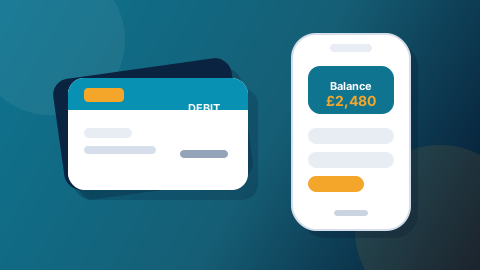
Bank charges, overdraft fees and poor-value accounts can become recurring costs. Start by reviewing whether your current account still suits you.
 Everyday banking
Featured guide
Current account switching guide
How the Current Account Switch Service works, what moves automatically, and how to compare switching bonuses.
6 min readUpdated 21 Jul 2026
Explore cost-cutting categories
Jump into the cost areas where published guides and tools can help today.
- Banking feesSpot monthly charges, overdraft costs and avoidable account fees.Explore banking fees
- Everyday spendingReview groceries, travel and lifestyle spending inside a monthly budget.Explore everyday spending
- Overdraft costsUnderstand arranged and unarranged overdraft pricing.Explore overdraft costs
- Recurring paymentsReview subscriptions, memberships and other repeating payments.Explore recurring costs
- Household billsList utilities, communications and other regular household costs in one place.Open Budget Planner
- Choosing an accountCompare fees, apps, cash access and overdrafts before you switch.Explore account choice
Quick wins to review this month
A practical checklist — pick the items that apply to your household.
- Cancel unused subscriptions
- Check whether any introductory prices have ended
- Review mobile and broadband contracts
- Check insurance renewal dates
- Review overdraft usage and bank fees
- Compare energy/utilities if appropriate
- Review recurring card payments and direct debits
- Identify one flexible spending category to reduce
Not every saving will apply to everyone. Focus on costs you can change without creating new fees or losing important cover or services.
Review your monthly bills
List your regular household costs in one place so you can see which ones are fixed, variable or due for renewal.
Home
- Rent / mortgage
- Council tax
- Energy
- Water
Communications
- Broadband
- Mobile
- TV / subscriptions
Insurance
- Home
- Car
- Other policies
Finance
- Bank account fees
- Overdraft
- Credit repayments
Lifestyle
- Memberships
- Streaming
- Recurring apps / services
Put renewal dates in your calendar
Insurance, broadband, mobile and other contracts can become more expensive after introductory periods or at renewal. Recording renewal dates gives you time to compare options before prices change.
Reduce avoidable banking costs
Account fees
Check whether paid account features are worth the monthly cost.
Overdraft usage
Repeated overdraft use can become expensive. Review the EAR, fees and whether another cash-flow approach may be cheaper.
Switching current accounts
If your account no longer suits you, compare features, fees and switching requirements.
Fixed costs vs flexible costs
Separating committed and adjustable spending makes it clearer where you can act first.
Fixed / committed costs
- Rent / mortgage
- Council tax
- Contracts
- Loan repayments
These may be harder to change quickly, but can still be reviewed at renewal or refinancing points.
Flexible costs
- Groceries
- Entertainment
- Shopping
- Eating out
These can often be adjusted more quickly, but a sustainable budget should remain realistic.
Small spending patterns can add up
Practical areas to review — without judging day-to-day choices.
Groceries
Plan around what you actually use and compare recurring weekly costs.
Transport
Review commuting, fuel, parking and public-transport spending.
Eating out & takeaway
Track frequency rather than focusing on one-off purchases.
Shopping & entertainment
Set a realistic monthly amount rather than relying on ad-hoc restrictions.
Track what you actually save
A lower quoted price only helps if the saving continues after switching costs, fees and behavioural changes.
- Step 1
Record the old monthly cost
- Step 2
Record the new monthly cost
- Step 3
Review after 2–3 months
Include any exit fees, setup fees or promotional-rate expiry when comparing.
Illustrative arithmetic only
Small monthly savings add up
- £20 per month = £240 over 12 months
- £50 per month = £600 over 12 months
These figures are simple multiplication examples — not typical or guaranteed savings.
Next step
Put your savings into a monthly budget
Once you have reduced regular costs, update your budget so the extra money has a clear purpose — for example bills, savings or debt repayments.
How to budget without feeling broke
A simple monthly system that prioritises essentials, goals and guilt-free spending.
6 min read
Tools that can help
Use these alongside the guides to explore your own numbers.
Debt Payoff Calculator
See how different repayments affect the time taken to clear debt.
Open Debt Payoff Calculator
Continue saving money
Related guides and hubs once you have reviewed regular costs.

- Budgeting & Money ManagementPlan and organise your money with a clearer monthly system.Explore budgeting
- Build Your SavingsBuild a cash buffer and work towards savings goals.Explore savings
- Reduce DebtExplore repayment strategies and borrowing costs.Explore debt
- Improve Your CreditUnderstand credit reports and practical ways to strengthen your profile.Explore credit
Questions or updates
If you spot something that needs correcting or want to contact our editorial team, get in touch.
Related
Continue with a related page
Links are chosen from this category’s registry — not a generic keyword dump.